
Rajesh Builders

Blogs

Blogs

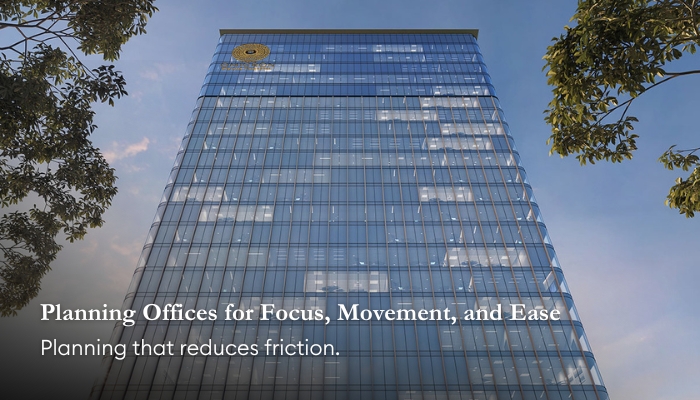
Planning Offices for Focus, Movement, and Ease

Introduction The way commercial spaces are planned today goes beyond desks and meeting rooms. It impacts how people think, move, interact, and ultimately perform through a workday. Thoughtful planning is not an aesthetic afterthought. It is a strategic foundation that supports productivity, clarity, and a sense of calm in the workplace. 1. Light, Comfort, and Spatial Quality Natural light, ventilation, and overall comfort are not incidental to productivity. They are fundamental. A well-planned office ensures daylight reaches deep into the floor plate and that air movement is unobstructed. These factors help reduce fatigue, support concentration, and foster a working rhythm that feels organic rather than forced. When people feel physically comfortable, they can give their attention fully to their work. Where there is glare, heat buildup, or stagnant air, even the best intentions get interrupted. 2. Intuitive Circulation and Movement An office must move as smoothly as the people who use it. Circulation planning, zoning of functions and logical placement of amenities reduce friction. Poorly resolved circulation leads to unnecessary movement, cognitive interruptions, and a persistent undercurrent of inefficiency. Effective circulation connects people to the spaces they need—workstations, collaboration areas, meeting rooms and services—with clarity. It eliminates confusion and subtly reinforces a sense of order in daily work patterns. 3. Supporting Diverse Work Modes Work is not singular. It alternates between focus, collaboration, discussion, review and pause. A productive office responds to these different modes with spatial variety. Quiet zones allow deep focus. Structured collaboration areas invite dialogue. Simple, calm break spaces offer pause without distraction. This calibrated variety encourages both concentration and connectivity. People choose the space that suits the task, rather than being constrained by one uniform environment. 4. Reliable Infrastructure and Everyday Ease Beyond spatial planning, the everyday efficiency of a workspace rests on reliable building systems and thoughtful provisions. Smooth vertical circulation, stable power supply, clear signage, adequate parking and comfortable common areas all contribute to a sense of ease. When these fundamentals work without friction, people are free to focus on performance rather than logistics.Productivity is not merely a function of tools, targets or policies. It begins with space that is aware of how people actually move, interact and work. Good planning accommodates light, simplifies movement and supports a range of work behaviours. In such spaces, productivity is a natural outcome—not a pressured goal. In commercial real estate, where long-term performance and tenant satisfaction matter, the quality of planning is as important as location or cost. An office that favors ease, clarity and human comfort ultimately elevates the way work happens within it.
Blogs

More Than Walls: How a Home Shapes Daily Life in Ways We Often Overlook

1. Layouts That Match How People Actually Live A home isn’t a checklist. It’s a rhythm.From morning routines to weekend rest, the way your home flows should reflect how life actually unfolds. Thoughtful circulation spaces, intuitive zoning (where noisy and quiet areas don’t clash), and simple things like where the shoe rack goes—all of these decisions make your everyday experience smoother.We obsess over these invisible comforts, because they matter more than we realize.  2. Light, Air, and That Sense of SpaceYou don’t need a massive apartment to feel open. What you need is design that respects space—by inviting in light, allowing for cross-ventilation, and eliminating unnecessary barriers.We design homes with intentional voids, higher ceilings, and strategic window placement. Because how a home breathes affects how you do too. 3. Your Home Should Work Harder Than YouStorage. Utility. Built-ins. Space efficiency isn’t about cramming—it’s about thinking ahead.We often speak to families who feel cramped in larger homes simply because the layout wasn’t planned with their lifestyle in mind. A well-designed 2 BHK can outperform a poorly designed 3 BHK. The trick lies in anticipating how the space will be used—and building with foresight, not formula. 4. Surroundings That Support Your LifestyleIt’s not just about what’s within your walls. It’s about what’s beyond them. Can you walk to your nearest grocery store? Is there a park nearby for an evening stroll? Is the neighbourhood peaceful, safe, and well-connected?We choose to build in locations where we’d be comfortable living ourselves. Places that offer convenience, calm, and a sense of belonging. Because your environment is part of your home too.  5. Long-Term Comfort Over Short-Term TrendsA good home should age gracefully—not feel outdated after five years. That’s why we favour timeless design, quality materials, and structural decisions that endure.We don’t rush projects, or cut corners for quicker sales. Whether it’s a residential home or a commercial space, we build for longevity—because the people living or working there deserve nothing less. A home is not defined by the sum of its parts. It’s defined by how thoughtfully those parts come together. At Rajesh Builders, we’ve always believed that a well-designed home is more than just architecture—it’s an experience. One that quietly improves your life, day after day. Because in the end, it’s not about the house.It’s about the life you build inside it.

Blogs

Thoughtful Spaces, Better Living: What Truly Defines a Good Home Today?

1. Functionality Over Flash A thoughtfully planned layout does more for your lifestyle than any luxury label can. Wide passageways, practical storage, cross ventilation, natural light—all these invisible features shape how you experience your home every single day. That’s why our projects, whether large or small, always begin with a question: How will someone live here? 2. The Right Locality Matters More Than Ever A good home is not just about the indoors. It’s also about the world just outside your gate. Whether it’s Koregaon Park or a quiet pocket near Model Colony, we choose locations that offer safety, accessibility, greenery, and long-term value. We don’t believe in building where we don’t see life thriving—not just today, but ten years from now. 3. Small Communities, Stronger Connections In an age of dense high-rises, we continue to believe in low-density living. A building with 20 homes may not make headlines—but it can make your life more peaceful, private, and personal. This principle applies to our mid-budget projects too. The scale may vary, but the mindsetdoesn’t. 4. A Home That Grows With You The best homes are the ones that adapt. A study today becomes a nursery tomorrow. A second bedroom becomes a remote office. Homes should never lock you into one version of life. They should evolve with your needs—and that means every corner should be designed with care. 5. Balance Is the Real Luxury You don’t have to choose between aesthetics and function. Between location and price. Or between comfort and character. Our goal is to build homes that feel balanced—places where beauty and usability meet, quietly and naturally. That applies whether we’re building a 3 BHK in a residential pocket, or a boutique commercial building for a growing business. We’ve never chased trends. We’ve never chased numbers. What we’ve always pursued is sense. In design, in decisions, and in the way we build. Because no matter your budget or lifestyle, the right home should make life easier, richer, and more your own.

Scroll to Top