Rajesh Builders

Author name: Rajesh Builders

Blogs

Address or Thoughtful Location

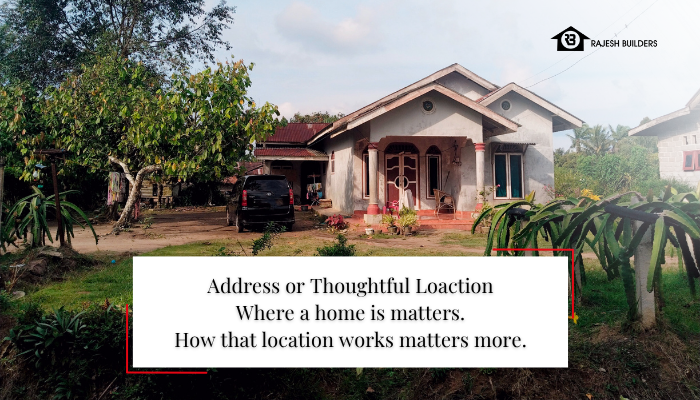
Every home purchase begins with a question that sounds simple: where? Most answers stop at the address. The name of the road, the prestige of the pin code, the way it reads on a visiting card. A thoughtful buyer goes further. An address is what you print. A location is what you live. In a growing city like Pune, the gap between the two can be wide. The difference between an address and a location An address is one line of text. It is read in a second and forgotten in two. A location is everything that line does not say: how long the school run takes, how the road behaves at peak hour, where the sun rises on the balcony, what the neighbourhood will look like in ten years. Two homes can share a pin code and offer entirely different lives. What a thoughtful location considers Daily distances. Not the distance to the airport, which matters twelve times a year, but the distance to work, school, the market, and the family doctor, which matters twelve times a week. A thoughtful location shortens the everyday. The road, not the road name. Road width, footpaths, tree cover, how traffic moves in the morning and how the street feels at night. A respected name on a congested stretch serves the card, not the household. Orientation and surroundings. What the building faces decides light, air, and noise for decades. A location is also its immediate company: what stands beside the plot today, and what is likely to come up around it tomorrow. The next ten years. Infrastructure that is planned, transit under construction, the direction in which the city is growing. A thoughtful location is chosen for the years ahead, not only for the year of possession. Five questions to ask before you decide 1. What does an ordinary Tuesday look like from this home: commute, school, errands? 2. How does the road behave at 9 am, and again at 9 pm? 3. What does the balcony face today, and what could it face in five years? 4. How far is reliable healthcare? 5. Would this location still make sense if the address had no name? Thought before brick At Rajesh Builders, location is the first decision, taken with the same care as the plan itself and settled before design begins. The address follows. It always does. An address impresses. A location serves. Choose the one you will live with.
Blogs

Vastu-Friendly Homes in Pune: Where Tradition Meets Thoughtful Planning

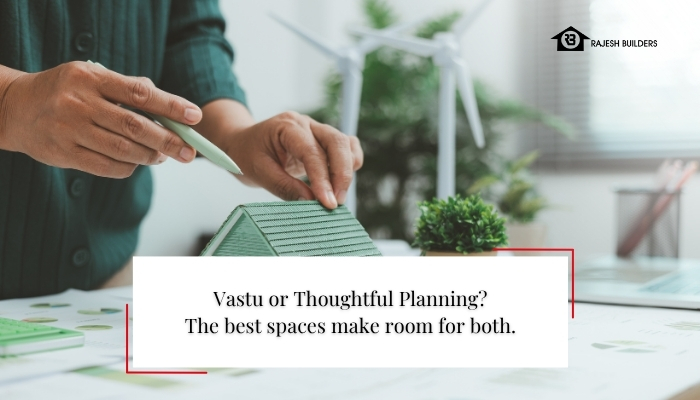
For many homebuyers in Pune, Vastu remains an important part of choosing a home. Entrance direction, kitchen placement and room orientation can influence how comfortable and reassuring a home feels to its residents. But a good home also needs to work practically. Natural light, ventilation, privacy, circulation and well-planned spaces play an equally important role in everyday living. The best residential design brings these considerations together rather than treating them as separate priorities. Vastu Should Work with the Floor Plan A Vastu-friendly home is not simply about placing rooms in preferred directions. The entrance should also allow easy movement. Bedrooms should offer privacy. Kitchens should receive adequate ventilation. Living spaces should feel open, connected and comfortable. This is where thoughtful home planning becomes important. When Vastu principles are considered alongside functionality from the beginning, the result can be a home that respects traditional preferences without compromising everyday comfort. Natural Light and Ventilation Still Matter Modern homebuyers increasingly look for homes with good natural light and ventilation. These features influence how pleasant a home feels throughout the day and can make interiors feel brighter, fresher and more comfortable. A thoughtfully planned home considers how light enters different rooms, how air moves through the space and how one area connects to another. These are fundamental parts of good residential design, irrespective of style or size. Look Beyond the Vastu Checklist When evaluating a Vastu-friendly home in Pune, it helps to look beyond directions alone. Ask whether the layout feels natural. Check whether rooms receive sufficient light and air. Consider the relationship between private and common areas. Most importantly, think about whether the home will remain comfortable for everyday living. Because a home should work both in belief and in practice. At Rajesh Builders, we believe thoughtful residential design is about finding this balance, respecting traditional preferences while creating homes that respond to the realities of modern living. The best homes do not ask you to choose between Vastu and good design. They make room for both.

Blogs

Quiet Luxury in Real Estate: When Quality Speaks Without Excess

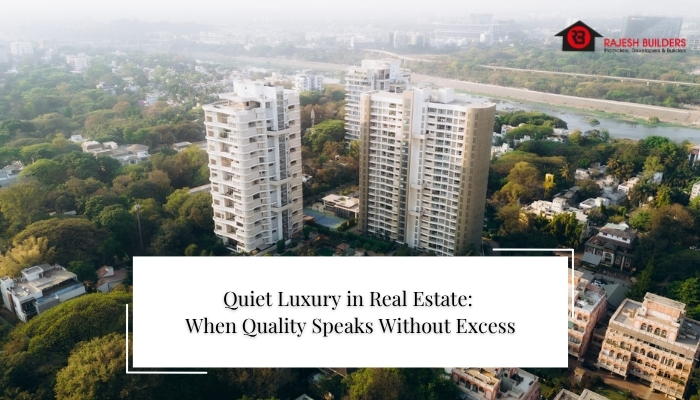
Walk into any premium project in Pune and you will see luxury immediately. Imported marble in the lobby. Designer light fittings. A show flat styled to perfection. Now ask a different question. How will this home feel on an ordinary Tuesday, three years from now? That question separates luxury from thoughtfulness. Both matter. Only one is visible in a site visit. Luxury impresses Luxury is the language of first impressions. Beautiful materials. Premium finishes. Statement details. There is nothing wrong with any of it. A well-crafted surface signals care, and buyers respond to it for good reason. Quality you can see is quality you can trust. But luxury answers only one question: how does this home look? It says very little about how the home works. Thoughtfulness stays Thoughtful design is quieter. It rarely photographs well. It shows up in the way a home behaves, not in the way it presents. Morning light that reaches the kitchen, where the day actually begins. A layout that lets two people get ready for work without crossing paths. Bedrooms placed away from the lift lobby, so privacy never has to be arranged. Cross ventilation that keeps rooms fresh without effort. None of this appears in a brochure shot. All of it appears in daily life. These are the details residents stop noticing and never stop benefiting from. Luxury can be added. Thoughtfulness has to be planned. Here is the practical difference for a homebuyer. Finishes can be upgraded. Flooring can be changed, kitchens can be redone, lighting can be replaced. Luxury is, to a large extent, retrofittable. Five things are not: Orientation. The direction a home faces decides its light and heat for its entire life. Natural light. Window placement and depth of rooms are fixed at the drawing stage. Ventilation. Air moves through a plan, or it does not. Proportion. A room’s dimensions either feel right or feel off. No furniture fixes a bad ratio. Circulation. How you move through a home is decided before the foundation is poured. These decisions are made years before a buyer walks in. They cannot be corrected later at any price. This is why evaluating a home’s plan matters more than evaluating its finish. Our earlier article on smart spatial planning covers how much of a home’s sense of space comes from decisions made on paper. The best homes have both This is not an argument against luxury. It is an argument about sequence. Luxury creates delight. Thoughtfulness creates comfort. One makes an impression. The other becomes part of everyday life. A home that has only the first ages into disappointment. A home built on the second carries its luxury well, because the beauty sits on a plan that works. The quiet luxury movement in real estate is, at its core, a recognition of this order. Quality speaks. It does not need to shout. What to look for at your next site visit A short checklist for buyers evaluating thoughtfully designed homes in Pune: Visit at two different times of day. Track where the natural light falls. Walk the daily routes. Entrance to kitchen. Bedroom to bathroom. Note where paths cross. Open windows on opposite sides. Feel whether air actually moves. Stand in each room empty. Trust your sense of proportion before styling distracts it. Ask what sits beyond each wall. Privacy is a matter of placement, not curtains. Finishes will be the first thing shown to you. Let them be the last thing you judge. Designed for tomorrow At Rajesh Builders, we believe thoughtful design is the foundation of lasting luxury. Since 1982, our homes in Pune have been planned around orientation, light, ventilation, proportion, and circulation first, with luxury built on top of that foundation, not in place of it. Because the homes that stay with you are rarely the loudest. They are simply the ones that continue to feel right. Explore our current residential project, Rajveer Imperia, or get in touch to see the difference in person. Suggested FAQ schema (optional, for rich results): Q: What is the difference between luxury and thoughtful home design? A: Luxury refers to visible quality such as materials and finishes. Thoughtful design refers to how a home functions: its light, ventilation, layout, and privacy. Luxury can be upgraded later. Thoughtful design must be planned before construction. Q: What should I check during a site visit apart from finishes? A: Natural light at different times of day, cross ventilation, room proportions, movement paths through the home, and the placement of bedrooms relative to shared walls and lobbies.

Blogs

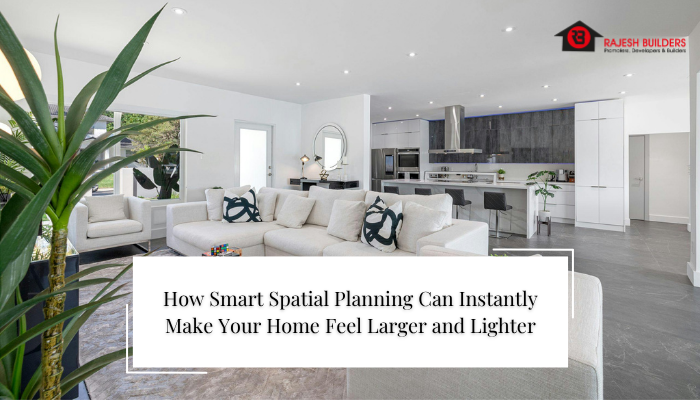
How Smart Spatial Planning Can Instantly Make Your Home Feel Larger and Lighter

We often focus on square footage when buying a home, but true living comfort isn’t just about how much space you have it’s about how well that space is designed to support your daily life. A thoughtful floor plan does more for your home than any expensive renovation or trendy furniture ever could. If you are planning to invest in your next home, this guide will help you understand why spatial planning is the most important invisible feature of a luxury residence  The Science of Flow and MovementThe strength of a well-planned home lies in its circulation, the path you take from the entrance to the living room, the kitchen, and the bedrooms. Good design minimizes ‘dead space’ and ensures that every hallway and corner serves a purpose. When a layout matches how people actually live, the home feels inherently more spacious, regardless of the actual carpet area. 2. Maximizing Light and VentilationA truly premium home maximizes natural light through strategic window placement and open-concept living areas. Even in a dense urban environment, a thoughtfully designed layout can channel cross-ventilation and sunlight into the heart of the home, creating an atmosphere of openness and vitality that feels miles away from the city’s hustle. 3. Creating ‘Zones’ of PrivacyA great home is a balance between connection and retreat. Smart planning separates social areas where you host and gather from private quarters, where you rest. By prioritizing this separation through subtle architectural choices rather than thick, intrusive walls, we create homes that feel both expansive and intimate. The Rajesh Builders StandardAt Rajesh Builders, we believe that luxury is not just about high-end finishes; it’s about structural execution and thoughtful layouts. We design our spaces to be frictionless where furniture placement, storage, and natural movement align to enhance your daily experience. Why It MattersWhen you choose a home with a superior floor plan, you are choosing a lifetime of ease. It’s the difference between a house that you live in and a home that works for you. Explore Your OptionsDiscover premium residences by Rajesh Builders that prioritize spatial efficiency, light, and modern functionality. Find a home that perfectly matches your lifestyle today. Get in touch to learn more.

Blogs

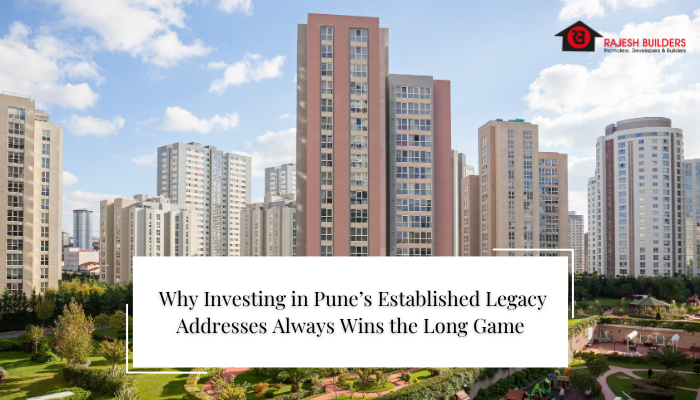
Why Investing in Pune’s Established Legacy Addresses Always Wins the Long Game

When it comes to real estate in Pune, the allure of new often competes with the prestige of established. While emerging suburbs offer modern flash, there is a distinct, long-term advantage to investing in Pune’s legacy neighborhoods like Prabhat Road, Law College Road, or Model Colony. If you are looking to secure a home that balances lifestyle, prestige, and consistent capital appreciation, this comparison of legacy vs. trending micro-markets will help you make the right choice. The Character of Legacy LivingLegacy locations in Pune are defined by more than just their pin codes. They are characterized by wide, tree-lined streets, established social infrastructure, and a low-density residential vibe that is becoming increasingly rare. In these areas, you aren’t just buying a flat; you are becoming part of a refined, traditional living experience that values privacy and community over pure commercial expansion. The Investment Case: Stability Meets AppreciationWhile newer areas may offer a lower entry price, they often come with the volatility of ongoing development and uncertain social infrastructure. Conversely, Pune’s legacy addresses provide: Strictly Limited Supply: Due to the maturity of these neighbourhoods, available land is rare. This scarcity keeps property values high and demand constant.Proven Resilience:  These areas have weathered market cycles better than most, making them the gold standard for wealth preservation.Immediate Lifestyle Quality: You don’t have to wait for the neighbourhoods to ‘develop.’ The elite educational institutions, premium cafes, and established corporate hubs are already right at your doorstep. Is a Legacy Address Right for You?Choosing an established address is an investment in certainty. You should prioritize these locations if:You value exclusivity, history, and a quiet, refined living environment.You are looking for long-term family wealth preservation rather than short-term speculative gains.You prefer a mature where the ‘vibe’ is already set and preserved. A Trusted Presence in Pune’s Finest LocationsDevelopers like Rajesh Builders have long recognized the inherent value of these prime micro-markets. By establishing a strong presence in Pune’s most desirable neighborhoods, we ensure our projects reflect the unique character of the area while offering the modern amenities today’s families demand. Final ThoughtsThe decision ultimately comes down to your long-term vision. If you value a home that offers both emotional comfort and financial stability, Pune’s legacy addresses remain the undisputed choice. Explore our premium residences across these historic neighborhoods and find a home that perfectly matches your lifestyle. Get in touch with us today to learn more.

Blogs

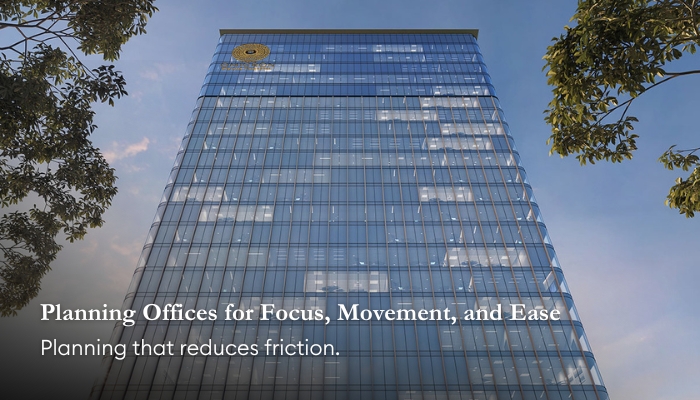
Planning Offices for Focus, Movement, and Ease

Introduction The way commercial spaces are planned today goes beyond desks and meeting rooms. It impacts how people think, move, interact, and ultimately perform through a workday. Thoughtful planning is not an aesthetic afterthought. It is a strategic foundation that supports productivity, clarity, and a sense of calm in the workplace. 1. Light, Comfort, and Spatial Quality Natural light, ventilation, and overall comfort are not incidental to productivity. They are fundamental. A well-planned office ensures daylight reaches deep into the floor plate and that air movement is unobstructed. These factors help reduce fatigue, support concentration, and foster a working rhythm that feels organic rather than forced. When people feel physically comfortable, they can give their attention fully to their work. Where there is glare, heat buildup, or stagnant air, even the best intentions get interrupted. 2. Intuitive Circulation and Movement An office must move as smoothly as the people who use it. Circulation planning, zoning of functions and logical placement of amenities reduce friction. Poorly resolved circulation leads to unnecessary movement, cognitive interruptions, and a persistent undercurrent of inefficiency. Effective circulation connects people to the spaces they need—workstations, collaboration areas, meeting rooms and services—with clarity. It eliminates confusion and subtly reinforces a sense of order in daily work patterns. 3. Supporting Diverse Work Modes Work is not singular. It alternates between focus, collaboration, discussion, review and pause. A productive office responds to these different modes with spatial variety. Quiet zones allow deep focus. Structured collaboration areas invite dialogue. Simple, calm break spaces offer pause without distraction. This calibrated variety encourages both concentration and connectivity. People choose the space that suits the task, rather than being constrained by one uniform environment. 4. Reliable Infrastructure and Everyday Ease Beyond spatial planning, the everyday efficiency of a workspace rests on reliable building systems and thoughtful provisions. Smooth vertical circulation, stable power supply, clear signage, adequate parking and comfortable common areas all contribute to a sense of ease. When these fundamentals work without friction, people are free to focus on performance rather than logistics.Productivity is not merely a function of tools, targets or policies. It begins with space that is aware of how people actually move, interact and work. Good planning accommodates light, simplifies movement and supports a range of work behaviours. In such spaces, productivity is a natural outcome—not a pressured goal. In commercial real estate, where long-term performance and tenant satisfaction matter, the quality of planning is as important as location or cost. An office that favors ease, clarity and human comfort ultimately elevates the way work happens within it.

Blogs

More Than Walls: How a Home Shapes Daily Life in Ways We Often Overlook

1. Layouts That Match How People Actually Live A home isn’t a checklist. It’s a rhythm.From morning routines to weekend rest, the way your home flows should reflect how life actually unfolds. Thoughtful circulation spaces, intuitive zoning (where noisy and quiet areas don’t clash), and simple things like where the shoe rack goes—all of these decisions make your everyday experience smoother.We obsess over these invisible comforts, because they matter more than we realize.  2. Light, Air, and That Sense of SpaceYou don’t need a massive apartment to feel open. What you need is design that respects space—by inviting in light, allowing for cross-ventilation, and eliminating unnecessary barriers.We design homes with intentional voids, higher ceilings, and strategic window placement. Because how a home breathes affects how you do too. 3. Your Home Should Work Harder Than YouStorage. Utility. Built-ins. Space efficiency isn’t about cramming—it’s about thinking ahead.We often speak to families who feel cramped in larger homes simply because the layout wasn’t planned with their lifestyle in mind. A well-designed 2 BHK can outperform a poorly designed 3 BHK. The trick lies in anticipating how the space will be used—and building with foresight, not formula. 4. Surroundings That Support Your LifestyleIt’s not just about what’s within your walls. It’s about what’s beyond them. Can you walk to your nearest grocery store? Is there a park nearby for an evening stroll? Is the neighbourhood peaceful, safe, and well-connected?We choose to build in locations where we’d be comfortable living ourselves. Places that offer convenience, calm, and a sense of belonging. Because your environment is part of your home too.  5. Long-Term Comfort Over Short-Term TrendsA good home should age gracefully—not feel outdated after five years. That’s why we favour timeless design, quality materials, and structural decisions that endure.We don’t rush projects, or cut corners for quicker sales. Whether it’s a residential home or a commercial space, we build for longevity—because the people living or working there deserve nothing less. A home is not defined by the sum of its parts. It’s defined by how thoughtfully those parts come together. At Rajesh Builders, we’ve always believed that a well-designed home is more than just architecture—it’s an experience. One that quietly improves your life, day after day. Because in the end, it’s not about the house.It’s about the life you build inside it.

Blogs

Thoughtful Spaces, Better Living: What Truly Defines a Good Home Today?

1. Functionality Over Flash A thoughtfully planned layout does more for your lifestyle than any luxury label can. Wide passageways, practical storage, cross ventilation, natural light—all these invisible features shape how you experience your home every single day. That’s why our projects, whether large or small, always begin with a question: How will someone live here? 2. The Right Locality Matters More Than Ever A good home is not just about the indoors. It’s also about the world just outside your gate. Whether it’s Koregaon Park or a quiet pocket near Model Colony, we choose locations that offer safety, accessibility, greenery, and long-term value. We don’t believe in building where we don’t see life thriving—not just today, but ten years from now. 3. Small Communities, Stronger Connections In an age of dense high-rises, we continue to believe in low-density living. A building with 20 homes may not make headlines—but it can make your life more peaceful, private, and personal. This principle applies to our mid-budget projects too. The scale may vary, but the mindsetdoesn’t. 4. A Home That Grows With You The best homes are the ones that adapt. A study today becomes a nursery tomorrow. A second bedroom becomes a remote office. Homes should never lock you into one version of life. They should evolve with your needs—and that means every corner should be designed with care. 5. Balance Is the Real Luxury You don’t have to choose between aesthetics and function. Between location and price. Or between comfort and character. Our goal is to build homes that feel balanced—places where beauty and usability meet, quietly and naturally. That applies whether we’re building a 3 BHK in a residential pocket, or a boutique commercial building for a growing business. We’ve never chased trends. We’ve never chased numbers. What we’ve always pursued is sense. In design, in decisions, and in the way we build. Because no matter your budget or lifestyle, the right home should make life easier, richer, and more your own.

Scroll to Top